
Most media companies hold huge collections of videos. Years and years of material – from news, sports, entertainment, and production archives. Still, for most organizations, finding the right moment inside that content is still surprisingly difficult.
Footage gets reviewed frame by frame. Because tags are added manually, gaps show up. When details are missing, promotions run blind.
The Result?
Valuable content remains hidden inside archives that are technically accessible but practically unusable. Just because something exists online does not make it functional. Locked in outdated formats, quality information often goes ignored. Available yet awkward, these resources collect dust in plain sight.
Streaming services, social media, OTT applications, and online libraries keep growing. Yet this spread brings something tougher to handle. A fresh hurdle has appeared
How do you make video truly searchable and usable at scale?
This is where video intelligence becomes critical infrastructure.
Content Is Growing Faster Than Our Ability to Use It.
Every day, media organizations produce enormous amounts of video:
Broadcast footage, Live sports streams, Studio productions, Social-first video, User-generated content, Historical archives, etc.
But most media asset management (MAM) systems still rely heavily on:
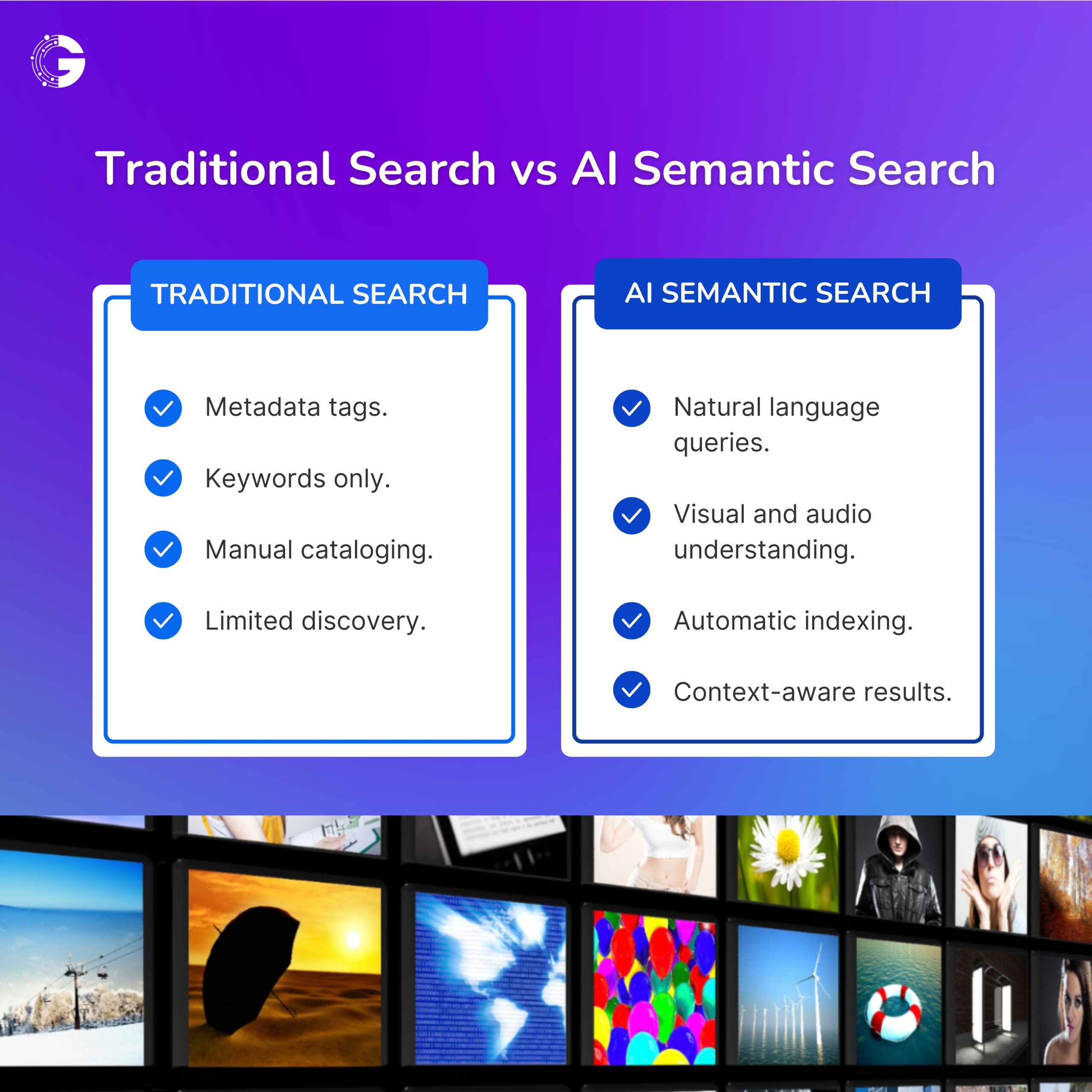
- Manual metadata tagging
- Keyword search
- Basic categories and labels
These practices work at small scale, but they easily break down when team is dealing with millions of hours of video.
The real value of video lies not in the file itself, but in what’s happening inside it.
- Who appears in the frame?
- What objects are present?
- What actions are happening?
- What words are spoken?
- What emotional tone does the scene carry?
Without understanding these elements, video remains more opaque to search systems.
What Video Intelligence Actually Means?
Video intelligence is the ability to transform raw video into structured, searchable knowledge. Instead of relying on manual tags, AI can analyze video to understand:
- Visual objects and scenes
- Spoken dialogue
- Background audio
- Actions and motion
- Context and relationships
This allows teams to search video the same way they search text or documents.
For example:
“Show clips of people celebrating in stadium crowds”
“Find shots of city skylines at sunset”
“Locate interviews mentioning climate policy”
The system understands the meaning of the request, not just keywords.
The Real Shift Happens Across the Entire Content Pipeline.
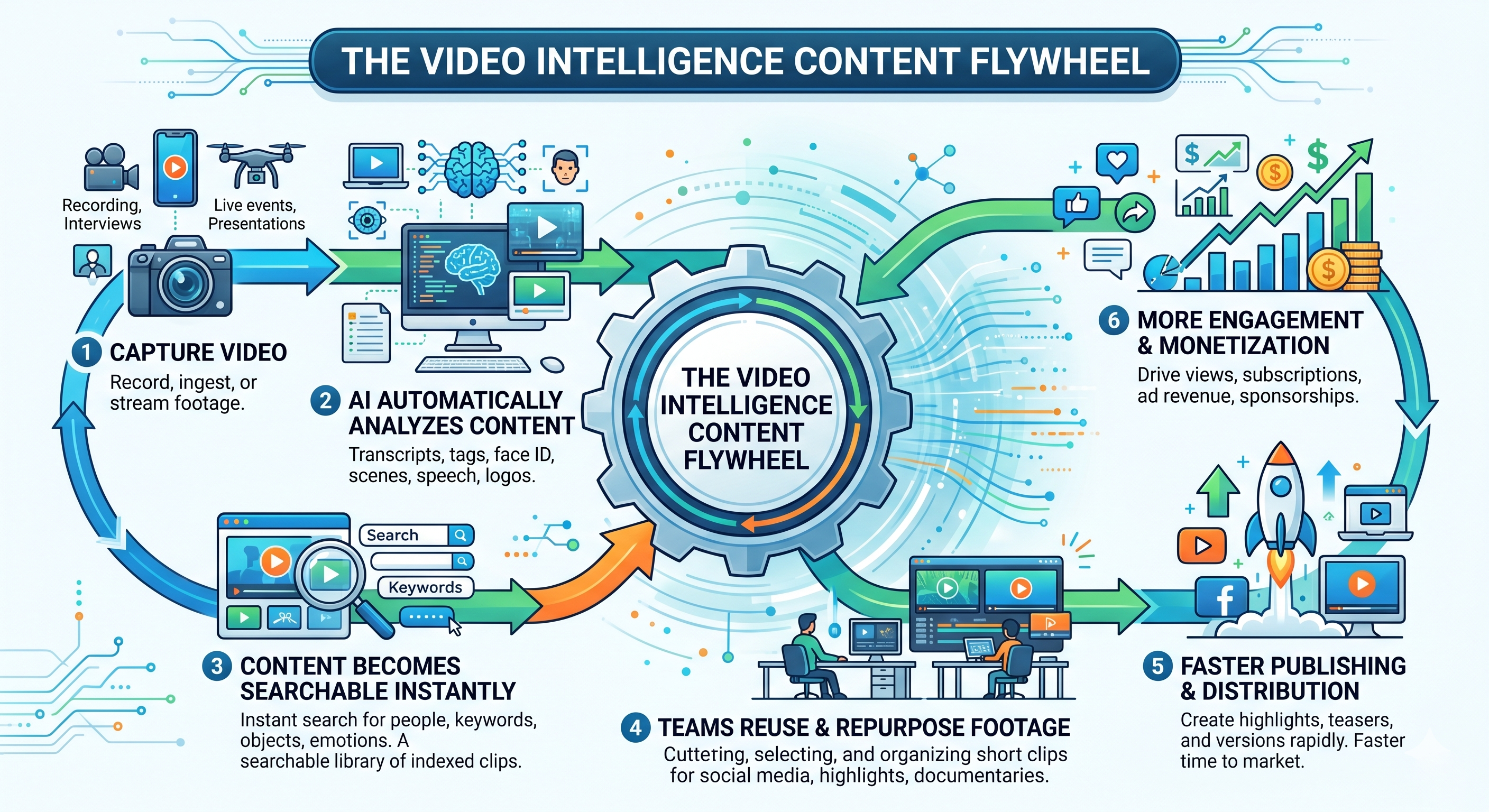
Video intelligence is not just about archives. Its real impact appears when it becomes part of the entire media workflow.’
During Production:
Editors and producers can quickly find the best takes without manually scrubbing through footage.
Instead of searching by clip names or timestamps, teams can query scenes based on what actually happens in them. This dramatically accelerates editing and story assembly.
In Post-Production:
Creative teams often need specific visual elements: B-roll footage, Emotional reaction shots, Background scenes, Specific objects or locations.
AI-powered search can instantly surface relevant clips from entire archives, saving hours of manual work.
In Distribution and Publishing:
Speed matters more than ever in digital media.
For sports broadcasters, newsrooms, and entertainment publishers, the difference between minutes and seconds can determine whether content trends or disappears.
Semantic media search allows teams to quickly find highlights, reactions, or contextual footage the moment they need it.
The Untapped Revenue Inside Video Archives.
For many media organizations, archives are treated as storage rather than an opportunity.
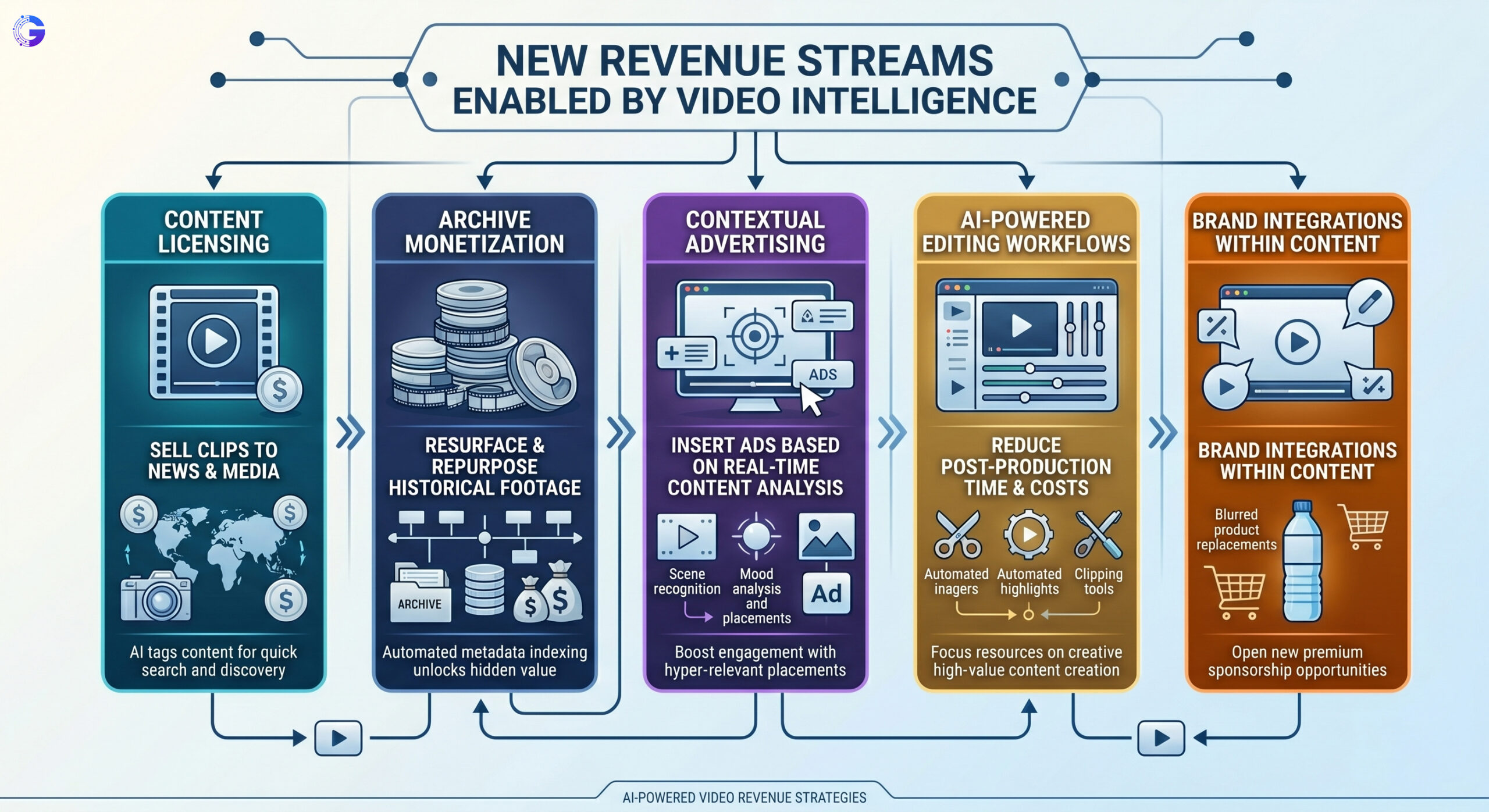
Yet those archives contain enormous untapped value. When video becomes easily searchable, organizations can:
- Repurpose historical footage
- License clips more efficiently
- Create thematic content collections
- Build contextual advertising opportunities
One emerging example is contextual brand integration.
Instead of generic ad placements, brands increasingly want their products associated with specific environments or story contexts.
For instance:
- A beverage brand appears in a sports celebration scene.
- A tech device placed naturally in a workspace setting.
- A travel brand featured in destination footage.
This approach enables new forms of monetization without disrupting the viewer experience.
The Window for Early Adoption Is Open.
Media companies are currently navigating several major transitions simultaneously:
- Digitizing legacy video libraries.
- Moving workflows to the cloud.
- Expanding distribution across digital platforms.
The organizations that incorporate video intelligence early will gain significant advantages in:
Content discovery, Production efficiency, Audience engagement, Monetization opportunities. Those who wait may find themselves with massive archives but limited ability to use them effectively.
See It Live at NAB 2026.
This week at NAB Show 2026 in Las Vegas, Gyrus AI will be demonstrating how video intelligence can transform media workflows.
We’ll be showcasing:
- Semantic Media Search: AI-powered video discovery
- Virtual Product Placement: Scalable contextual brand integration
If you’re attending NAB and want to explore how these technologies can work with your content pipeline, we’d love to connect.


