
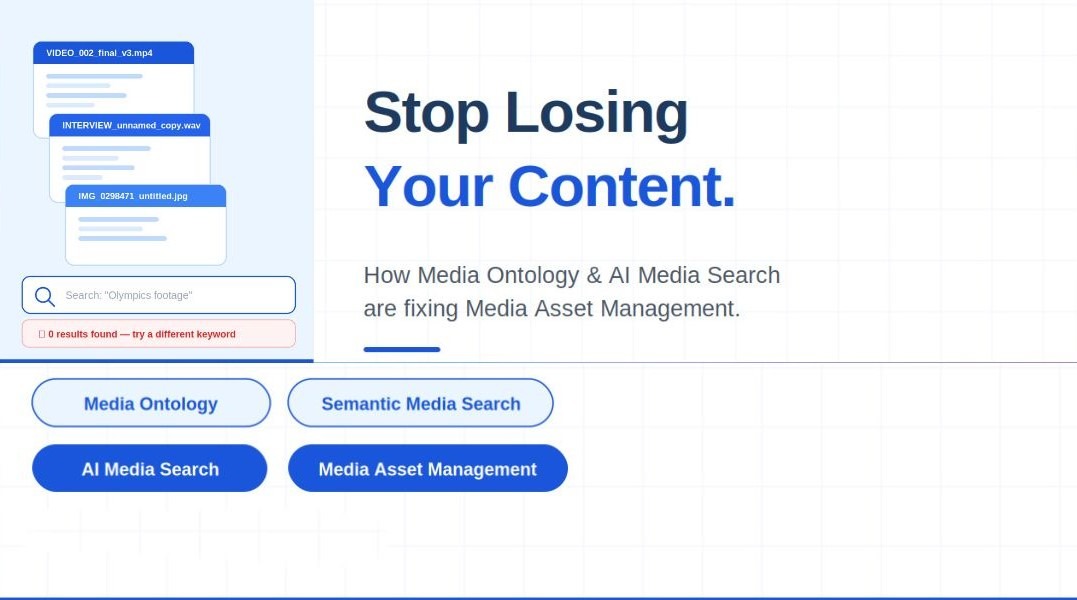
If you’ve ever worked in a media company, you know the pain. You know exactly that footage exists somewhere. You shot it, logged it, maybe even tagged it. But three weeks later or so, when you need it, it’s gone – buried under thousands of assets with vague filenames and half-filled metadata fields.
This challenge has nothing to do with space or storage. What matters is how things are arranged. Yet, solutions built long ago still fail at handling it. Years pass – still no real progress.
Here’s what’s changing that:
The real problem with keyword search:
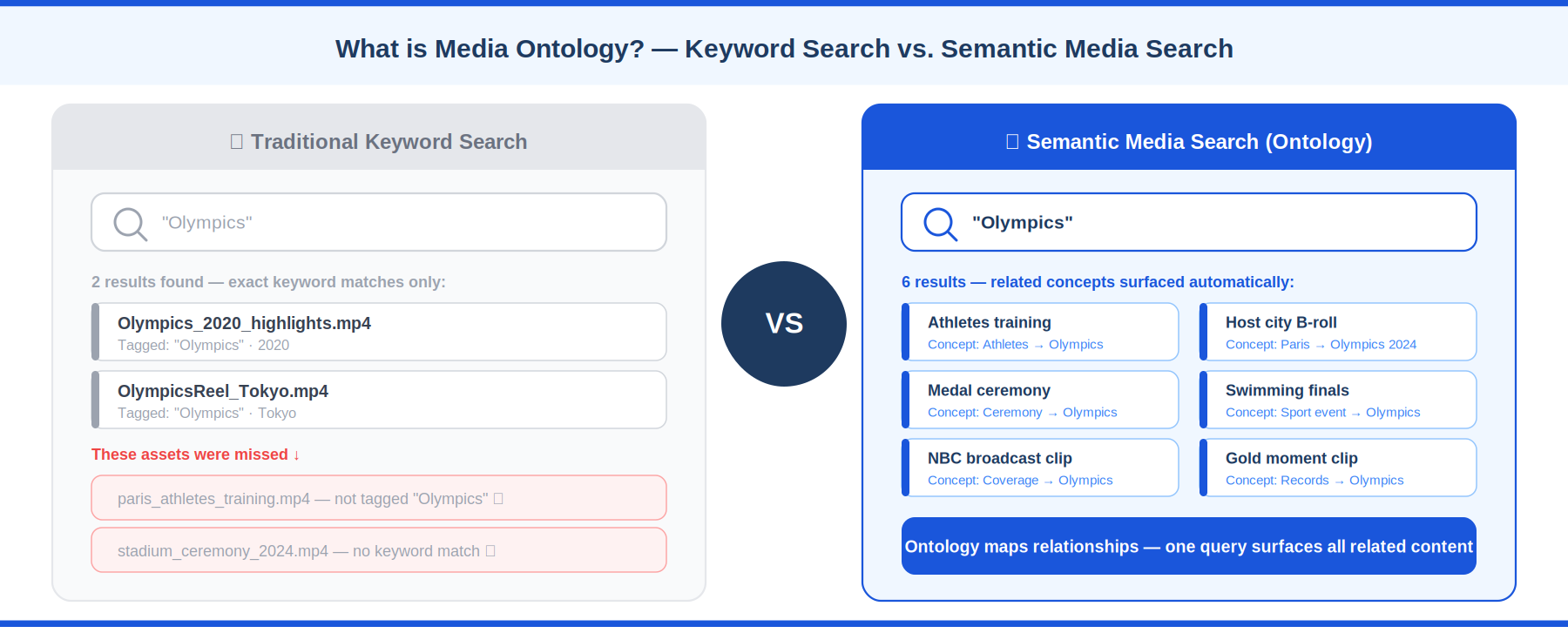
Searching through the most current MAM setups means entering a term like “Olympics.” Results appear only if files have that exact word in their name or label. Nothing more related to the query shows up. A search match must be precise – close enough does not count.
Yet consider the videos showing runners preparing near the Seine. Scenes where tens of thousands fill stands – no brand visible anywhere. A conversation with a trainer referring to “these events,” though he avoids naming them outright.
Most overlooked details slip right past keyword searches. When dealing with a large set of videos – think thousands of hours of video – untapped material remains hidden in plain sight, simply because it lacks the visible labels.
Here comes media ontology:
What if meaning could be mapped? Media Ontology might bring up images of dusty philosophy lectures, yet within media it serves a hands-on role. Through the organized networks, ideas often get linked based on significance – meaning comes not from the labels alone, but from how things are related. A machine grasps more than terms; context forms through ties that bind them.
When used in media, this idea becomes the base for what people today call semantic media search. Rather than just spotting repeated terms, the technology recognizes links – like how “Olympics” connects to players, contests, host places, athletic games, and opening rituals. Look up one piece, find related pieces too.
This is the shift from “find files that contain this word” to “find content that relates to this idea.”
AI media search is taking this further:
Ontology on its own is powerful, but when it’s paired with AI, things get genuinely interesting.
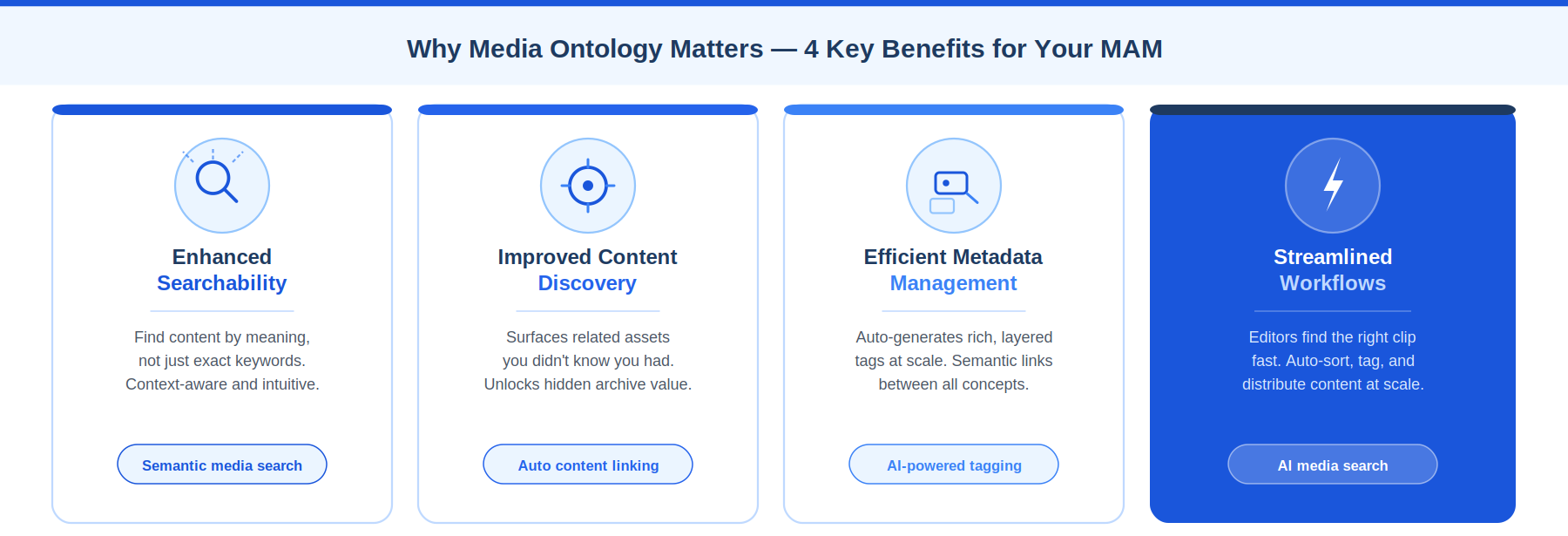
Modern AI media search systems like what we’ve been building at Gyrus AI – don’t just rely on metadata you manually enter. The AI actually watches and listens to the content. It identifies objects in a scene, analyzes actions, and understands context. A clip tagged as “press conference” might also be surfaced when someone searches for “CEO interview” or “company announcement,” because the AI understands those are related concepts or simply the context.
This kind of AI-powered video search removes the burden of perfect tagging from human editors. The system fills in the gaps, automatically generating rich, layered metadata that would take teams weeks to create manually.
Knowledge graphs: connecting the dots:
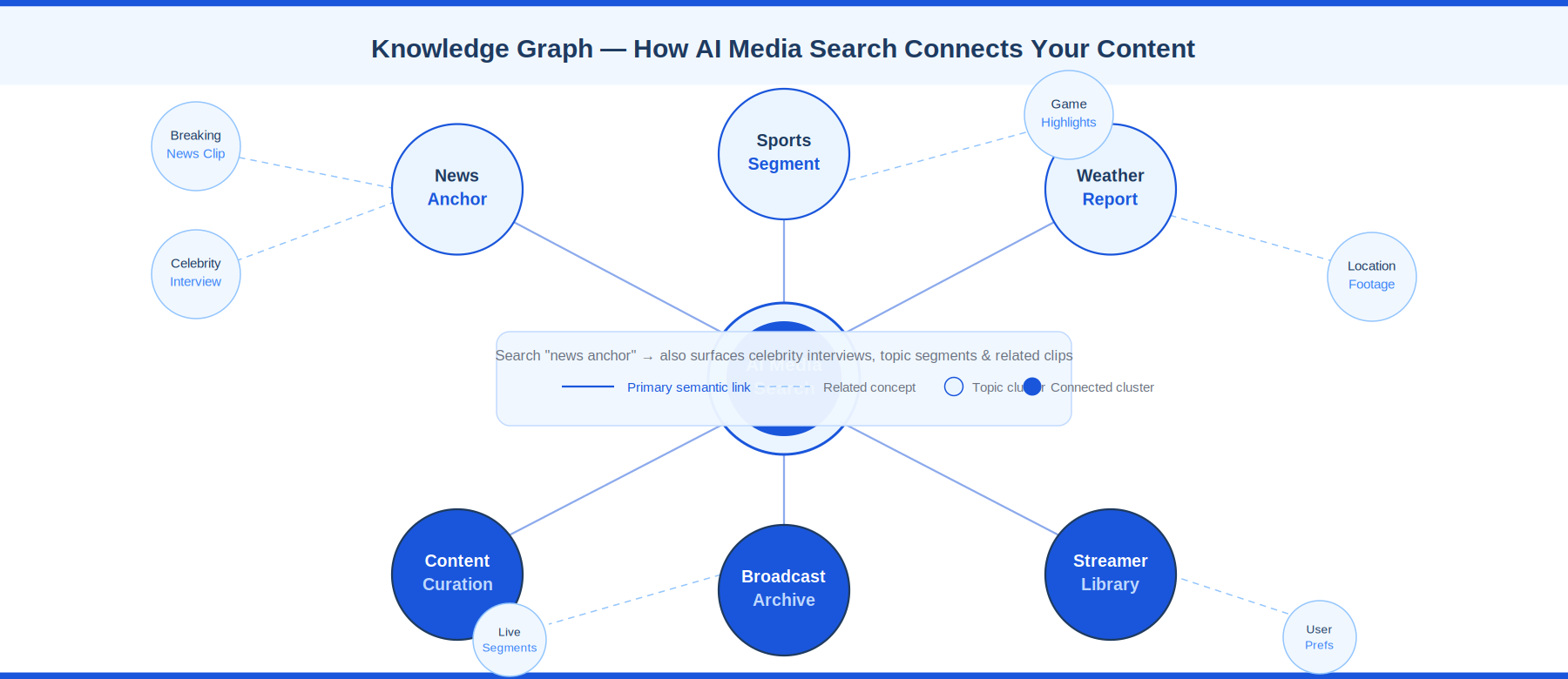
A key part of this system sits in the background: the knowledge graph. It links the core ideas, characters, locations, and even key happenings via structured relationships. Consider it like a web where real meanings come from connections between the core elements. This framework helps machines get the context by showing how things fit together across time and real space.
Integrated within your Media Asset Management setup, finding video assets shifts from scanning a list to consulting an informed assistant. A query about a “news anchor” will return not just the video clip/relevant footage of them being in the screen speaking, but also their past interviews, key subjects talked about, and major stories covered live. Instead of just isolated results, related materials appear through deeper context.
What once seemed like an add-on now starts to feel like an essential – broadcasters and streaming services are expected to understand their audience through data. Intelligence that connects viewer behavior to content choices has shifted from optional to standard, quietly reshaping what audiences assume behind the screen.
What does this mean for the people doing the actual work?
Obviously, less time taken for searching clips gives editors extra room to focus on cutting sequences. Metadata-related tasks become manageable for archivists instead of overwhelming burdens. Content strategists start exploring hidden assets – footage once forgotten now fits today’s needs.
Here is the change: managing your media/video data collection shifts from draining resources to offering a real advantage out of it. What once felt like upkeep now turns into usable value. Instead of constant maintenance, it begins to serve a purpose. A burden transforms – now it works for you.
Where things are headed?
Day by day, AI and semantic search are evolving. Media firms using ontology-powered MAM pull ahead while others stick to hand-based tagging. Content keeps piling up at a relentless pace. In fact, production speeds are increasing rather than slowing.
Staying ahead often depends less on size than on speed – those firms pulling ahead tend to locate their resources quickly, then apply them without delay.
Media ontology holds that potential. Honestly speaking, the timing feels long overdue.
Curious how AI media search and semantic search can transform the way your team manages content? Happy to share more about what we’ve been building at Gyrus AI.


